#industrial hinges#heavy duty hinges#stainless steel hinges#piano hinges#butt hinges
Heavy-Duty Industrial Hinges: Selection Guide for Maximum Performance
Industrial hinges are critical components in countless applications, from machinery enclosures to heavy doors and access panels. At CDCOMPOSITE, we provide a comprehensive range of heavy-duty industrial hinges designed for demanding environments.
Types of Industrial Hinges
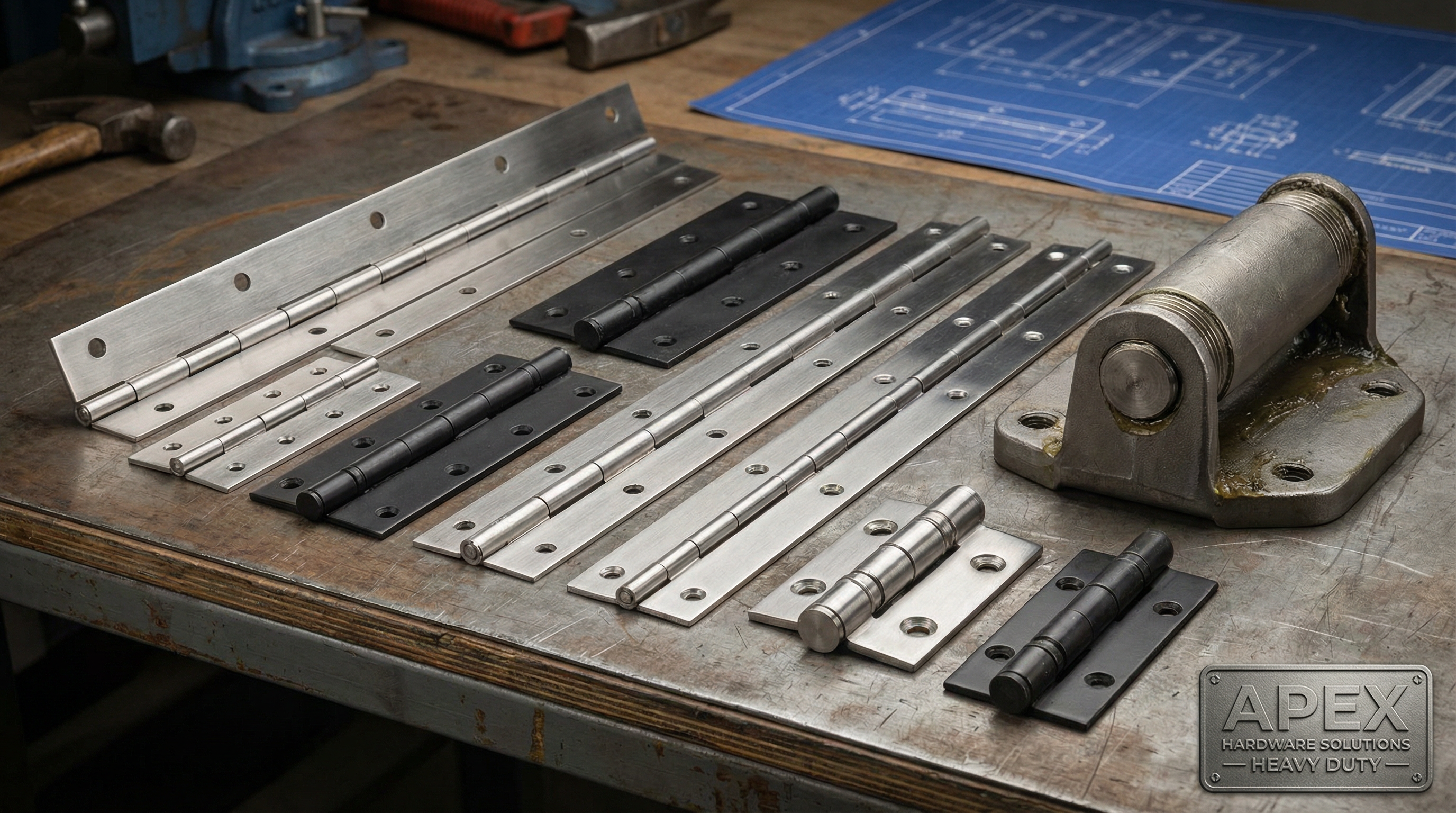
Butt Hinges
The most common type of hinge, consisting of two leaves joined by a pin:
- Standard butt hinges: General-purpose applications
- Ball bearing hinges: High-frequency use, smooth operation
- Spring hinges: Self-closing functionality
- Rising butt hinges: Door lifts when opening
Continuous (Piano) Hinges
Running the full length of the door or panel:
- Advantages: Even load distribution, no sagging
- Materials: Steel, stainless steel, aluminum
- Applications: Long doors, lids, access panels
Strap Hinges
Heavy-duty hinges with extended leaves:
- T-strap: One extended leaf
- Cross-garnet: Both leaves extended
- Applications: Gates, barn doors, heavy panels
Specialty Hinges
- Concealed hinges: Hidden when closed
- Pivot hinges: Top and bottom mounting
- Weld-on hinges: Permanent installation
- Lift-off hinges: Easy door removal
Material Selection
Carbon Steel
| Finish | Corrosion Resistance | Cost |
|---|---|---|
| Plain | Poor | Low |
| Zinc plated | Moderate | Low |
| Hot-dip galvanized | Good | Medium |
| Powder coated | Good | Medium |
Stainless Steel
- 304 SS: Indoor, light outdoor use
- 316 SS: Marine, chemical environments
- Duplex SS: High strength, corrosive environments
Aluminum
- Lightweight applications
- Good corrosion resistance
- Lower load capacity than steel
Load Capacity Considerations
Factors Affecting Load Capacity
- Hinge material and thickness
- Pin diameter
- Number of knuckles
- Mounting method
- Door/panel weight and size
Load Calculation
For proper hinge selection, consider:
- Static load: Weight of door/panel
- Dynamic load: Forces during operation
- Safety factor: Typically 2-3x static load
Application Guidelines
Enclosures and Cabinets
- Use ball bearing hinges for frequent access
- Consider concealed hinges for aesthetics
- Ensure adequate load rating
Heavy Doors and Gates
- Strap hinges for maximum support
- Multiple hinges for even load distribution
- Consider self-closing mechanisms
Industrial Machinery
- Weld-on hinges for permanent installation
- Lift-off hinges for maintenance access
- Stainless steel for washdown environments
CDCOMPOSITE Hinge Solutions
Product Range
- Standard hinges: Immediate availability
- Custom hinges: Made to specification
- Hinge accessories: Pins, bushings, mounting hardware
Quality Standards
- Material certifications
- Dimensional accuracy
- Load testing available
- Corrosion resistance verification
[Image blocked: Industrial Hinges]
Expert Support
Our technical team can assist with:
- Hinge selection for your application
- Load calculations and recommendations
- Custom design and manufacturing
- Installation guidance
Contact CDCOMPOSITE today for expert hinge solutions.